A safe old age home is judged by how easily a resident can move, sleep, bathe, eat, call for help and remain engaged—not by a brochure’s list of services. Use the checklist below to inspect each facility, test its safety systems and compare written inclusions before choosing a residence.
Key takeaways
- Check step-free routes, lift access, handrails and wheelchair turning space.
- Inspect bedroom lighting, call buttons, bathroom layout and emergency access.
- Ask how staff respond to falls, medical alerts, infections and urgent transfers.
- Compare dementia support, dining routines, housekeeping and social spaces during a visit.
Which accessibility features make everyday movement safer?
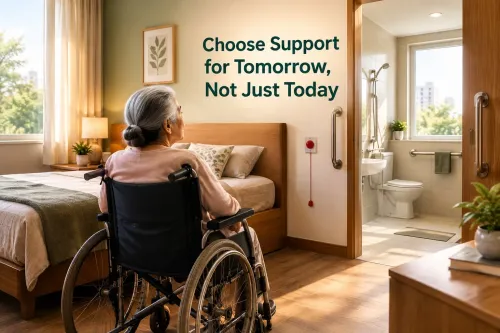
Safer everyday movement in an accessible old age home depends on a continuous route, not a ramp at the entrance. Bedrooms, bathrooms, dining areas, therapy rooms, gardens and emergency exits need step-free connections through lifts or ramps, clear doorways and wheelchair turning space.
Even, non-slip, non-glare flooring matters especially during Pune’s monsoon season, when wet surfaces expose loose rugs and abrupt floor-level changes.
- Check for handrails on corridors and stairs, clearly marked steps, unobstructed routes and even lighting without confusing shadows.
- Inspect accessible bathrooms for a level or low-threshold shower, shower seating, correctly positioned grab bars, a raised toilet seat and enough transfer space.
- Press the emergency call button and confirm it can be reached from the floor after a fall, not only from the toilet or shower seat.
| Feature | Safer provision | Warning sign |
|---|---|---|
| Route | Step-free connection and lift or ramp | A garden, therapy room or exit requires stairs |
| Floor | Matte, even, slip-resistant surface | Glossy tiles, loose rugs or sudden level changes |
| Bathroom | Grab bars, shower seat and raised toilet | Railings placed too far away to support a transfer |
| Steps | High-contrast edges and handrails | Poorly marked steps hidden by glare |
| Lighting | Illuminated switches and gentle night lighting | Dark routes or harsh glare that masks hazards |
What should you inspect inside the bedroom?
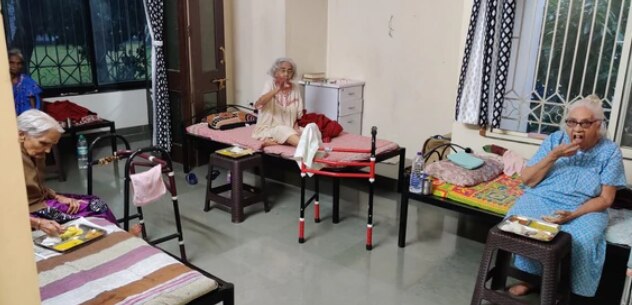
A bedroom passes inspection only if the resident can move, rest and receive care without losing privacy. Do not judge old age home rooms by décor alone; test the route from the doorway to the bed and attached bathroom with the resident’s actual wheelchair or walker.
1. Measure access around the bed. Leave space for a carer to stand beside the bed, position a wheelchair and assist a transfer. Check whether the bed height, mattress firmness and adjustable or fixed design suit the resident.
2. Check ventilation and temperature control. An air-conditioned room needs safe, reachable controls, working fans or windows, and indoor heat management for Pune summers. Ask how staff protect residents during heat waves and whether backup power runs cooling and essential equipment during outages.
3. Test lighting at night. Look for even, low-glare illumination, illuminated switches, a reachable reading light and night lighting that avoids confusing shadows. Power points should be reachable without trailing cables.
4. Inspect storage, privacy curtains or doors, and the roommate arrangement. Ask whether belongings fit securely and whether staff can observe urgent changes without exposing the resident during bathing, dressing or sleep.
5. Request the written outage plan. Confirm who checks residents, how rooms stay cool, and how staff respond if power fails overnight. These details are senior bedroom amenities, not decorative extras.
How do safety systems and clinical support work in practice?
A real safety system has a tested response behind every button. Ask staff to demonstrate the nurse call system, state the response target, and explain who answers overnight when the nursing station is not beside the room.
1. Check that bedside and bathroom call buttons are reachable from the bed, toilet and floor after a fall. Ask how often they are tested and how staff escalate an unanswered call.
2. Ask whether fall detection uses wearable devices, motion sensors or staff observation, and who assesses a fall before moving the resident.
3. Inspect fire alarms, illuminated evacuation routes, emergency exits, generator support for alarms and essential equipment, and low-glare night lighting. Ask for the date of the last evacuation drill and the plan for residents needing wheelchairs.
4. Clarify CCTV boundaries: cameras should cover corridors and entrances, not bedrooms or bathrooms. Ask who reviews footage and how privacy is protected.
5. Obtain the overnight nurse-to-resident coverage, the nurse’s location, nursing-station access and the expected response to chest pain, breathlessness, fever, confusion or injury. Ask when staff contact the doctor and call an ambulance.
6. For medication management for seniors, ask how admission prescriptions are reconciled, medicines are locked, reminders and administration are recorded, and missed or refused doses are reported to family and clinicians.
7. Request a sample hospital-transfer record covering symptoms, medicines, observations, treatment, discharge instructions and rehabilitation needs.
Which dining, cleaning and infection-control amenities should you verify?
Nutrition and infection prevention depend on daily routines, not attractive dining rooms. Ask whether the kitchen provides diabetic meals, low-salt meals and texture-modified food for chewing or swallowing difficulties, with safe fluid consistencies and allergy controls.
Check whether staff provide easy-grip cutlery, suitably weighted cups, supported upright seating and enough time to eat. Ask for written answers about:
- Meal times, hydration monitoring and how families review menus.
- Clinical follow-up after coughing, choking or unexplained weight loss.
- Cleaning frequency for bedrooms, bathrooms, dining areas and shared lounges.
- Linen-change rules, labels on personal clothing, lost-item handling and whether personal-care items are included.
- Hand-hygiene points, waste disposal and laundry handling.
- Separation of residents with contagious illness and the facility’s outbreak procedure.
| Amenity to verify | What to ask for | Risk if unclear |
|---|---|---|
| Kitchen and dining support | Diet review, allergy controls and appropriate food or fluid consistency | Choking, dehydration or poor nutrition |
| Cleaning and laundry | Written schedules, linen rules and separate handling of soiled items | Odour, skin problems or cross-contamination |
| Infection control | Hand-hygiene supplies, separation space and outbreak communication | Illness spreading through shared rooms |
| Personal belongings | Clothing labels, inventory and lost-item process | Embarrassment, disputes or missing essentials |
A spacious dining room is not infection control; observe whether staff clean high-touch surfaces and enforce hand hygiene between care tasks.
What amenities support residents with dementia, mobility needs and different social preferences?
Dementia-friendly design reduces confusion without taking away independence: secured exits, short uncluttered routes, distinctive doors, simple symbols and strong colour contrast help residents find bedrooms, toilets and dining areas. Familiar objects can identify a room; mirrors, busy patterns and reflective surfaces can cause distress.
1. Check for safe walking paths with even, non-glare flooring, handrails, resting points and clear sightlines. Ask how staff observe residents and respond to wandering without locking residents into an institutional routine.
2. Inspect the secured outdoor area. It should be step-free, shaded and furnished with seating, continuous paths, resting points and non-toxic, non-thorny plants, while preventing an unnoticed exit.
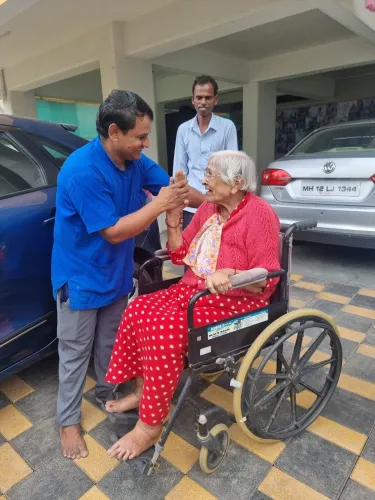
3. Ask to see the physiotherapy room, exercise equipment, transfer aids and walking areas. Confirm that mobility aids, wheelchairs and walkers have accessible storage, and that staff arrange hearing aids, glasses and other support devices.
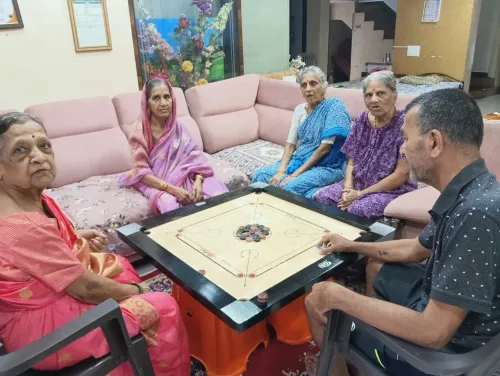
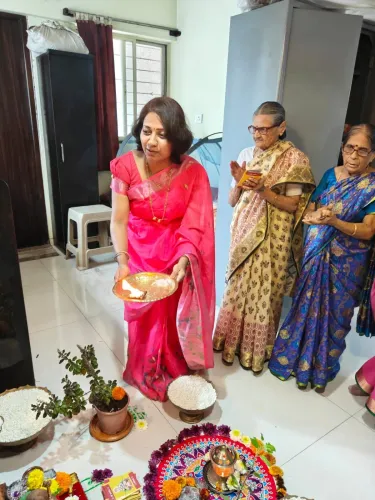
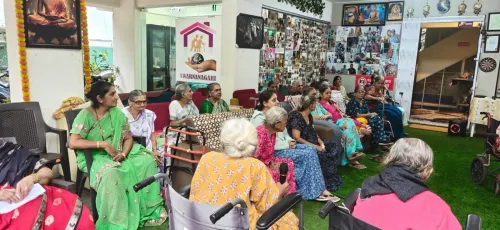
4. Look for quiet rooms and small activity spaces alongside supervised activities, purposeful tasks and cultural or religious programmes. Participation should be optional, because crowded corridors, loud rooms and compulsory groups can overwhelm residents.
A social test also includes comfortable family visiting space, phone access and video calls. Ask whether staff can adapt activities for hearing loss, dementia, limited stamina or a preference for one-to-one conversation rather than treating group attendance as engagement.
How can you compare amenities before selecting an old age home?
Use the same old age home checklist for every visit, then record answers in writing. This makes a senior living comparison based on care, not room appearance. Ask staff to demonstrate the nurse-call button, show an accessible bathroom, explain night staffing and response targets, and provide sample menus.
- Request the monthly fee schedule: included services, extra charges, medication administration, transport, laundry and higher-care costs.
- Check visiting hours, transport arrangements, hospital distance, trial-stay options and the care assessment procedure.
- Ask how care changes when a resident moves from independence to dementia or nursing care.
- Families considering Swarnanagari Old Age Homes 9765119625 should inspect the old age home in Pune and request written details matched to mobility, medical, dietary and cognitive needs.
Compare findings like this:
| Amenity | Verify | Warning sign |
|---|---|---|
| Safety | Call-button test and night response time | No defined escalation |
| Food | Menu samples and diet substitutions | Verbal promises only |
| Care | Assessment and changing-needs plan | No documented process |
Related products
 | Old Age Care Assisted living facilities offer supportive housing for older adults who are mostly independent and active but may need some help with daily tasks. View product → |
 | Old Age Care Our retirement homes offer more than just a place to live—they provide a supportive environment that combines healthcare, psychological support, and... View product → |
Frequently asked questions
Which accessibility features make everyday movement safer?
Look for continuous step-free routes, ramps or lifts, clear doorways, handrails, non-slip flooring, wheelchair turning space and accessible bathrooms.
What should you inspect inside the bedroom?
Check bed height, lighting, ventilation, storage, flooring, bathroom access, nurse-call controls and enough space for walking aids or a wheelchair.
How do safety systems and clinical support work in practice?
Ask how staff handle falls, emergencies, nurse-call alerts, medication support, routine health checks, hospital transfers and communication with families.
Which dining, cleaning and infection-control amenities should you verify?
Inspect meal areas, dietary accommodation, drinking-water access, cleaning schedules, laundry arrangements, hand-hygiene facilities and procedures for isolating infections.
What amenities support residents with dementia, mobility needs and different social preferences?
Look for wayfinding signs, secure outdoor areas, calm rooms, mobility equipment, rehabilitation space, varied activities and both communal and private spaces.
Related products
 | Old Age Care Facilities within Charges: 24hrs Nursing 24hrs Attended Service Housekeeping and Laundry Breakfast, Tea, Lunch, High Tea, Snacks, Dinner... View product → |
 | Old Age Care Dementia is not a single, specific illness but a broad term used to describe a range of symptoms that affect memory, thinking, and social abilities... View product → |