Choosing retirement living requires more than asking whether an older adult needs help today. You need to match documented abilities with the right care model, test how much choice and privacy a setting preserves, and confirm that support can increase safely as needs change.
Key takeaways
- Assess safe, consistent abilities rather than age or diagnosis alone.
- Record help frequency and whether transfers need one person or two.
- Compare home care, assisted living and residential care by support level.
- Ask about staffing, emergency response, medication support and future care needs.
How do you identify the right level of support today?
Base today’s decision on what the older adult can do safely and consistently, not on age or diagnosis alone. Record whether help is needed, how often it is needed, and whether transfers require one person or two.
Missed medicines, repeated falls, appliances left on, getting lost, unpaid bills or inability to respond to an emergency mean the arrangement needs review. Ask a doctor, nurse or geriatrician to document the assessment before comparing facilities.
- Bathing, dressing, toileting and continence
- Eating, swallowing and meal preparation
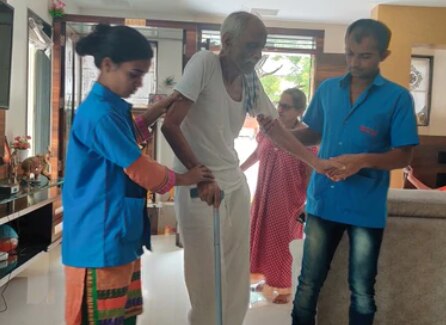
- Transfers, walking, balance and falls
- Medication management and appointment-keeping
- Sleep, communication and sensory loss
- Cognition, behaviour and social connection
| Option | What it means | When it applies |
|---|---|---|
| Independent living | Manages routines, medicines and emergencies safely | Daily support is not needed |
| Assisted living | Manages many activities but receives scheduled help | Assistance is predictable and non-clinical |
| Nursing care | Provides clinical oversight and rehabilitation | Complex needs, frequent monitoring, wounds, severe mobility limits or post-hospital recovery |
| Memory care | Uses a setting designed for cognitive impairment | Wandering, unsafe decisions or behavioural symptoms require specialised supervision |
| Home care | Delivers support in the person’s residence | The home is safe and reliable carers can reach it consistently |
How should you plan for needs that have not arrived yet?
Separate what the older adult needs today from changes that would require more support. Base the plan on observed activities of daily living, not age or diagnosis alone, and ask whether the setting can adapt without forcing another move.
| Needed now | Trigger for higher support |
|---|---|
| Mobility and falls | Second fall, unsafe transfers, or a new walking aid |
| Bathing and dressing | Repeated refusal, loss of balance, or two-person assistance |
| Toileting and continence | Frequent accidents, skin breakdown, or night-time help |
| Medication complexity | New insulin prescription, missed doses, or unsafe self-administration |
| Swallowing | Coughing during meals, weight loss, or a hospital admission |
| Sleep disruption | Repeated night waking, unsafe rising, or nighttime wandering |
| Sensory loss | Inability to hear instructions, read labels, or see hazards |
| Cognition and behaviour | Getting lost, aggression, or inability to use the call system |
| Social isolation | Withdrawal, missed meals, or no reliable daily contact |
Use these trigger points in a written future care planning document. Ask how often care plans are reviewed, who can change them, and whether the older adult, family, doctor or nurse has authority; reassess after a fall, hospitalisation or major decline.
A credible falls prevention plan includes medication review, vision and footwear checks, strength-and-balance exercise, suitable aids, lighting and transfer assistance.
Record preferred wake-up time, bathing routine, foods, activities, visitors, spiritual practices, room arrangement, clothing and acceptable assistance. Ask which tasks the person wants to retain. Measure independence by whether residents choose meals, activities, visitors and medication routines where clinically safe, not by service counts.
Discuss dementia care and decision-making capacity directly: dementia does not remove every right. Capacity can vary by decision and day, so document consent, preferences and the authorised decision-maker when needed.
How do the main retirement living alternatives compare?
The right comparison is the complete arrangement, not the room or advertised monthly fee. These retirement living options differ in privacy, staffing, travel, social contact, emergency response and the highest level of care they can sustain.
| Option | Main benefit | Trade-off and care limit |
|---|---|---|
| Staying at home | Familiar surroundings and maximum household control | Requires transport, home modifications, emergency response and coordination among family, doctors and carers; care ceiling depends on reliable home care |
| Live-in caregiver | Continuous presence and companionship | You manage employment, leave cover, supervision and replacement; clinical capability depends on the person hired |
| Part-time home nursing | Defined clinical tasks at scheduled visits | Gaps remain between visits, including overnight emergencies |
| Living with family | Stronger connection and shared support | Housing, privacy, work schedules and informal carers absorb the pressure |
| Retirement or assisted living | Meals, activities, personal care and clinical coordination in one setting | Communal routines and facility rules reduce household control |
| Nursing facility | Higher clinical dependency, monitoring and nursing support | Ordinary routines may offer less independence; it is unsuitable if extensive clinical care is unnecessary |
Calculate the annual total: accommodation, meals, care level, medicines, continence supplies, doctor visits, physiotherapy, ambulance transfers, deposits, attendant fees, annual increases, notice periods and room-change charges. Include the live-in caregiver’s wages, leave cover and replacement costs.
In India, the senior citizen law defines a senior citizen as someone aged 60 or above under the Maintenance and Welfare of Parents and Senior Citizens Act, 2007. Ask which registrations, municipal permissions, fire clearances and healthcare licences apply; “assisted living” is not one nationally uniform licence category.
What should you verify during a retirement living visit?
A facility visit checklist should test operations, not décor. “24-hour care” is incomplete unless the provider shows the overnight staffing roster, nurse qualifications, doctor-call arrangements and written escalation procedures.
| Claim | Evidence to request | Risk if unclear |
|---|---|---|
| 24-hour care | Shift roster, including nights; nurse credentials; fall and sudden-illness protocol | A caregiver may be present without clinical support |
| Hospital access | Ambulance response time, receiving hospital, escort arrangements and family-notification process | A hospital tie-up may not provide emergency treatment |
| Medication support | Ordering, storage, administration, audits and missed-dose records | Insulin, anticoagulants or sedatives may be mishandled |
Ask the manager to explain the response to each of these emergencies:
- Fall, fracture, chest pain, suspected stroke, sepsis and severe hypoglycaemia: who assesses the resident, when an ambulance is called, who travels with them and how family consent is handled.
- Dementia: controlled exits, visual cues, safe walking routes, easy-to-find bathrooms, low-glare lighting, noise control and a documented wandering response.
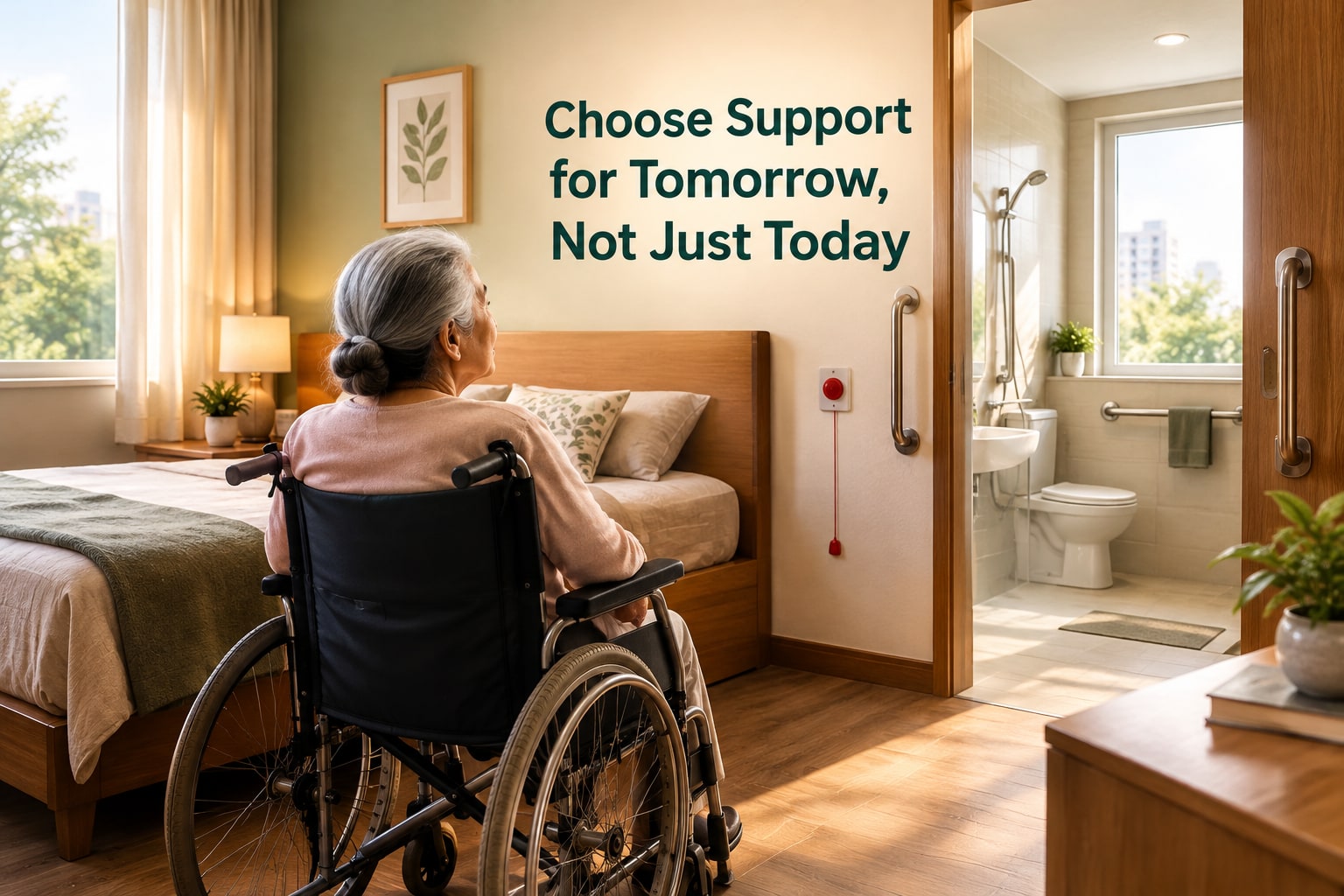
- Physical access: door widths, lifts, grab rails, shower seating, non-slip floors, bed-to-bathroom routes and call bells reachable from the floor.
- Continuity: backup power, ventilation, cooling, monsoon leaks, drainage, and whether lifts, pumps and clinical equipment work during Pune power interruptions.
- Geriatric care: physiotherapy, swallowing assessment, pressure-injury prevention, continence and oral care, vaccination review, infection control and post-hospital rehabilitation.
Ask Swarnanagari Old Age Homes 9765119625 for written answers in the admission documents, as you should when comparing retirement homes in Pune.
Related products
 | Old Age Care Our retirement homes offer more than just a place to live—they provide a supportive environment that combines healthcare, psychological support, and... View product → |
 | Old Age Care Assisted living facilities offer supportive housing for older adults who are mostly independent and active but may need some help with daily tasks. View product → |
How do you turn the assessment into a safe, comfortable decision?
Score each option on six separate lines: safety, clinical capability, resident independence, senior living comfort, social connection and total cost. Do not let a low price or attractive lounge conceal a weakness in another category.
1. Record comfort details: room size, ventilation, temperature control, night noise, privacy during personal care, furnishings, housekeeping frequency, bathroom access, and permission for personal belongings or pets. Check door widths, lift access, grab rails, shower seating, non-slip flooring and call bells reachable from the floor; an accessible retirement home must remain usable if mobility worsens.
2. Read the agreement before paying a deposit. Confirm fees, room-change rules, notice required to leave, what happens when needs exceed the facility’s capabilities, and how each care plan review is documented.
3. Inspect ordinary infection control, not just outbreak measures. Look for hand-hygiene points and cleaning schedules, then ask about isolation arrangements, respiratory-illness procedures, vaccination policy, food and water safety, and family notification.
4. Arrange a trial visit or short stay when available, and involve the older adult in the final inspection. Observe whether residents choose meals and activities, move safely, contact family and receive privacy rather than unnecessary restrictions.
5. After admission, schedule a review within the first few weeks and after every fall, hospitalisation, major functional decline or new behavioural symptom. Choose the setting that manages real risks while preserving ordinary decisions, relationships, movement, privacy and dignity.
Frequently asked questions
How do you identify the right level of retirement living support?
Assess what the older adult can do safely and consistently. Record the tasks needing help, how often help is required, and whether transfers need one person or two.
How should you plan for future care needs?
Discuss likely changes in mobility, memory, personal care and medical support. Choose an arrangement that can increase assistance without forcing a disruptive move.
How do retirement living alternatives compare?
Living at home offers familiarity but requires reliable home support and suitable safety changes. Independent retirement living suits people managing most daily tasks. Assisted living adds routine help, while residential care provides closer supervision and nursing support.
What should you verify during a retirement living visit?
Check cleanliness, accessibility, call-bell response, staffing at night, medication procedures, emergency transport, meals, activities, visiting rules and how the facility handles changing care needs.
Related products
 | Old Age Care Facilities within Charges: 24hrs Nursing 24hrs Attended Service Housekeeping and Laundry Breakfast, Tea, Lunch, High Tea, Snacks, Dinner... View product → |
 | Old Age Care Dementia is not a single, specific illness but a broad term used to describe a range of symptoms that affect memory, thinking, and social abilities... View product → |