A polished residence can still be unsafe if its overnight staffing, emergency process or care limits are unclear. By the end, you will have a practical inspection checklist, questions for nurses and managers, and a way to compare clinical suitability with the full cost of care.
Key takeaways
- Walk bedroom-to-bathroom routes and test call buttons.
- Match staffing and care limits to the resident’s actual needs.
- Ask how staff handle medicines, illness and emergencies.
- Compare contracts, extra charges and the admission assessment.
Inspect the building for everyday and emergency safety
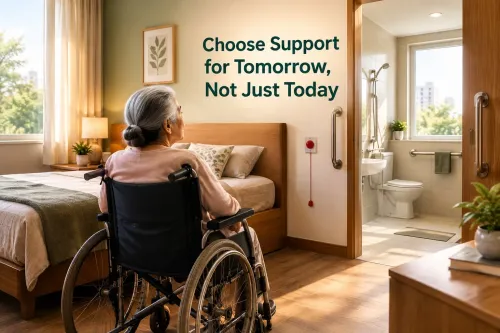
A safe building lets a frail, confused or wheelchair-using resident move, call for help and leave during a crisis. Walk the route from bedroom to bathroom, dining room and outdoor area; look for clear landmarks, continuous walking loops, bright lighting, non-slip floors, handrails and wheelchair access.
A locked dementia unit is not automatically safe: ask how exit restrictions, consent, family notification and emergency release work.
Use this senior residence safety checklist during the inspection:
- Press each nurse-call button and ask who answers at night.
- Check grab bars, bathroom alarms, low beds and other fall prevention equipment.
- Locate emergency exits, fire extinguishers and smoke detectors; ask how residents with limited mobility are evacuated.
- Ask whether a qualified nurse is physically present overnight, rather than reachable only by phone.
- Confirm power backup covers lifts, oxygen equipment, medicine refrigeration and essential lighting, not only corridors.
- Ask for the lift-failure procedure, nearest transfer hospital and ambulance response arrangement.
Do not accept a universal turning schedule as pressure-injury prevention. Ask to see the resident’s individual risk assessment, skin-inspection plan and wound-escalation process, based on mobility, comfort, tissue tolerance and the mattress or cushion.
Also request a written medication list showing each indication, dose, timing, allergy and prescriber, plus the process for missed doses and reconciliation after hospital discharge.
Match staffing and care limits to the resident’s real needs
A residence is suitable only if its staff can manage the resident’s actual risks, not merely provide meals and supervision. A person with falls, insulin, oxygen, swallowing difficulty or night-time confusion needs confirmed clinical coverage on every shift.
Ask these questions before admission:
- What does the overnight nurse roster show, and is a qualified nurse physically present rather than reachable by telephone? Ask for nurse qualifications, the resident-to-nurse load and the escalation process.
- What is the staff-to-resident ratio during mornings, evenings and nights? Count caregivers on duty, including the replacement plan for sickness, leave and vacancies.
- What does caregiver training cover? Look for documented instruction in safe transfers, fall prevention, dementia communication, continence care and recognising sudden illness.
- Which services are on site, and which depend on outside doctors, hospitals, diagnostic centres or ambulance providers?
- What conditions does the written scope of care exclude? Check rules for ventilator dependence, uncontrolled seizures, advanced pressure wounds, frequent hospital treatment, severe aggression, wandering and two-person transfers.
For dementia, observe an ordinary weekday. Activities should reflect the resident’s history, culture, abilities and cognitive level, not leave everyone watching television. For swallowing difficulty, ask for a dysphagia assessment and a written plan covering food texture, thickened fluids, medicine changes, meal supervision and action after coughing.
Ask how staff assess sudden confusion, reduced alertness, behaviour change or mobility loss. A same-day assessment and hospital-transfer pathway helps distinguish delirium from “normal dementia” and determines whether assisted living suitability remains appropriate.
Test the response to medicines, illness and emergencies
A missed dose should trigger a documented decision, not a shrug. Ask who checks the prescription, contacts the prescriber, records the omission and watches for harm. Confirm who handles insulin administration, including blood-glucose checks, meal timing and action after a refused or delayed dose.
Require medication reconciliation at admission, after every hospital stay and whenever prescriptions change. The written list should show each medicine’s purpose, dose, time, allergy risk and prescriber. Ask how medicines are locked, refrigerated and signed for, and whether staff can identify look-alike packaging.
Ask the residence to show its acute-change protocol. A new confusion, sleepiness, agitation, weakness or unsteady walk can be delirium rather than “normal dementia”; assessment should look for causes such as infection, dehydration or medication effects.
The delirium response should specify who assesses the resident the same day, which clinician is called and when hospital care is required.
Before admission, obtain the hospital transfer plan in writing. Check:
- The nearest receiving hospital and ambulance arrangement
- Who calls the family and sends the medication list, allergies, diagnoses and recent observations
- How oxygen equipment, essential lighting, medication refrigeration and lifts operate during a power failure
- How a resident with limited mobility leaves if the lift fails
- Which conditions exceed the residence’s scope of care, including uncontrolled seizures, severe aggression or ventilator dependence
A pleasant room cannot compensate for unclear escalation rules. Ask what happens after discharge: who receives new orders, restarts medication reconciliation and updates the care plan before the resident returns.
Look beyond comfort to personalised daily clinical care
A pleasant room does not show whether care prevents harm. Ask for an admission assessment covering bathing, dressing, toileting, transfers, walking, continence, eating, communication, sleep, cognition, mood and decision-making capacity. Without these baselines, staff may mistake medication effects, infection or poor care for inevitable decline.
Ask the residence to show how it will manage:
- Dysphagia management: documented food, fluid and medicine textures, thickened-fluid instructions, meal supervision, and the response to coughing or suspected aspiration. “Soft diet” alone is not a clinical plan.
- Pressure injury prevention: an individual repositioning plan based on mobility, skin checks, comfort, tissue tolerance, mattress and cushion; also ask for the wound-escalation process.
- Falls review: assessment of medicines, vision, footwear, gait, balance, postural blood pressure, osteoporosis risk, continence-related rushing and hazards. After a fall, the care plan must change when the review identifies a preventable cause.
- Continence and mobility support: scheduled toileting, prompt assistance and safe transfer methods, so rushing, dehydration and unsafe lifting do not create avoidable injury.
- Infection control: hand hygiene, isolation procedures, cleaning routines and a clear response to fever, diarrhoea or respiratory symptoms.
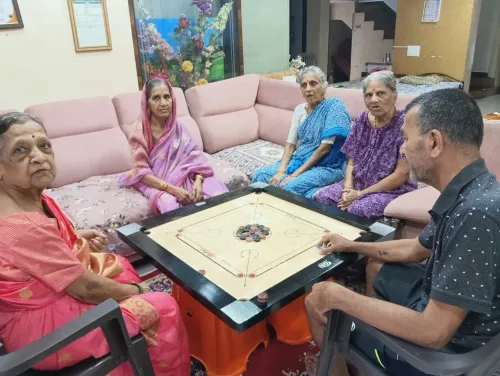
- Cognition and activity: personalised routines and activities linked to the resident’s history, culture, abilities and current cognitive level—not hours left in front of television.
Obtain the written scope of care and exclusion list before admission. It should address wandering, severe aggression, uncontrolled seizures, advanced pressure wounds, ventilator dependence, frequent hospital treatment and two-person transfers, with escalation rules for needs the residence cannot safely meet.
Compare the written contract, total cost and admission assessment
A sustainable choice survives three tests: the contract is precise, the total cost fits the family’s budget, and the admission assessment matches the resident’s needs. Ask for the written scope of care, exclusion list and escalation rules before paying a deposit.
Check whether ventilator dependence, uncontrolled seizures, advanced pressure wounds, frequent hospital treatment, severe aggression, wandering or two-person transfers trigger refusal or a later move.
To compare senior care fees Pune families actually pay, request a complete schedule covering:
- Admission or security deposit, refund conditions and notice period
- Nursing level, doctor visits, physiotherapy and dementia supervision
- Diapers, medicines, investigations, ambulance transport and hospital attendance
- Attendant charges, room changes, food modifications and annual fee increases
Compare the pricing model, not just the advertised monthly figure.
| Option | What it means | When it applies |
|---|---|---|
| Flat monthly package | Most listed services are included; exclusions must be named | Suitable when needs are stable and predictable |
| Base fee plus variable charges | Lower entry price, but care intensity adds separate costs | Risky when dementia, continence or nursing needs may increase |
| Deposit-heavy agreement | More money is paid before admission, with specific refund rules | Accept only after checking exit, transfer and unused-service terms |
The admission assessment should record bathing, dressing, toileting, transfers, walking, continence, eating, communication, sleep, cognition, mood and decision-making capacity. Ask how the residence reassesses sudden changes, including delirium, rather than labelling them dementia. Swarnanagari Old Age Homes 9765119625 should be compared using these same written details, not a tour’s atmosphere.
Frequently asked questions
What building safety features should you inspect in a senior care residence?
Walk from the bedroom to the bathroom, dining room and outdoor area. Check for clear landmarks, bright lighting, non-slip floors, handrails, wheelchair access, continuous walking routes and a working call system.
How can you tell whether staffing matches a resident’s care needs?
Describe the resident’s mobility, memory, toileting, bathing, medication and night-time needs. Ask which tasks staff provide, how quickly they respond and where the residence’s care limits begin.
What should you ask about medicines, illness and emergencies?
Ask who administers medicines, how doses are recorded, what happens after a missed dose or sudden illness, who contacts family and how the residence arranges urgent medical care.
Which contract and cost details should you compare?
Request the full written contract and admission assessment. Compare the monthly fee, included services, extra charges, notice terms, refund rules, hospital transfers and costs for higher care needs.