A senior may move from managing every task alone to needing help with bathing, medicines, meals, transfers or safety after a fall or illness. By the end, you will be able to identify changing care needs, match them to the right level of support and ask a care service whether it can safely handle the next stage.
Key takeaways
- Track falls, missed medicines, hygiene changes, weight loss, wandering, and unsafe cooking.
- Match each daily task with the hands-on help available during every shift.
- Request a post-discharge care plan covering transfers, medicines, wound care, and follow-up.
- Check dementia staffing, night supervision, emergency procedures, and care-review frequency.
Recognising When Everyday Independence Is Changing
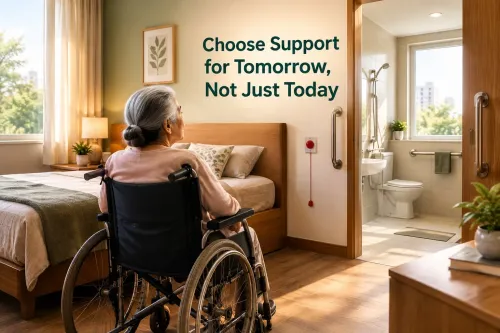
Repeated falls, missed medicines, unexplained weight loss, unsafe cooking, wandering, nighttime confusion, or declining hygiene are warning signs that independent living no longer provides enough safety. Needing hands-on help with transfers, bathing, dressing, toileting, eating or walking matters more than age alone. Compare the observed task with the support available every shift.
| Care level | Signs that may fit | Support required |
|---|---|---|
| Independent living | Manages activities and medicines safely | Occasional checks and emergency access |
| Assisted living | Needs reminders or help with bathing, dressing, meals, toileting or mobility | Attendants available throughout the day |
| Dementia care | Wandering, unsafe decisions, or repeated confusion | Supervision, secure routines and behaviour support |
| Rehabilitation support | Function reduced after illness, surgery or a fall | Walking, strength, balance and self-care practice |
| Nursing care | Wounds, injections, catheter care, oxygen or complex monitoring | Qualified clinical staff and documented treatment |
| Hospital care | Acute infection, serious injury, breathing difficulty or sudden confusion | Immediate medical assessment and treatment |
An admission assessment should record baseline ability in activities of daily living and instrumental tasks such as medicines, money, transport and telephone use. Repeat it after a fall, hospitalisation, acute illness, major medication change or noticeable decline.
Ask elderly care services how they document skin checks, repositioning, continence care and non-blanching redness; these are daily care, not optional extras.
How a Care Assessment Matches Support to Actual Needs
A care service should begin with a geriatric assessment that records what the senior can do safely, not just their diagnoses. A functional assessment should cover:
- Transfers, walking and use of mobility aids
- Bathing, dressing, eating and toileting
- Managing medicines, money, transport and telephone use
Complete medication reconciliation by comparing every prescribed drug, over-the-counter product and supplement with the senior’s actual use. Record missed doses, dizziness, sedation and medicines that increase fall risk.
Build the care plan around demonstrated needs: reminders for missed medicines, hands-on help for bathing, two-person assistance for unsafe transfers, rehabilitation for declining strength, or nursing and medical review when symptoms exceed routine support.
Pair fall prevention with footwear and vision checks, lighting, trip-hazard removal, balance activity and a documented response to every fall or near-fall.
Repeat the assessment after a fall, hospitalisation, acute illness, major medication change or noticeable decline. Review it on a scheduled basis as well.
Changes such as unfinished meals, weight loss, coughing while eating, nighttime confusion or new incontinence require prompt review, communication with the family and doctor, and a revised plan rather than staff quietly doing every task. The service must also confirm that it can safely provide the new level of care.
What Staff Do During Daily Care and Clinical Support
A safe shift begins with a written task boundary and a named person responsible for each task. Nursing care covers clinical assessment, medicines, wound care, catheter or oxygen procedures, and escalation; attendant care covers bathing, dressing, toileting, meals, repositioning and mobility help. Staff must not perform procedures outside their training or authorisation.
The care plan should show which support is delivered on every shift:
- Nursing staff complete scheduled nursing rounds, record observations and medicine administration, and contact the doctor or emergency service when readings, symptoms or behaviour cross the agreed threshold.
- Attendants help with transfers and personal care, use a hoist or two-person technique when prescribed, and report falls, skin changes, poor intake or missed medicines rather than treating them independently.
- Therapists guide exercises, walking practice and safe equipment use; they do not replace nursing assessment or provide constant supervision unless that service is explicitly staffed.
A headline staff-to-resident ratio proves little. Ask who is physically present overnight, who can provide a two-person transfer, who responds to a fall, and whether a registered nurse is on site or only on call.
A resident who wanders, cannot reposition, or needs feeding may require one-to-one supervision; confirm that coverage exists during meals, evenings and emergencies, not only during scheduled visits.
Changing Care After a Fall, Surgery or Hospital Discharge
Care intensity should increase immediately after a fracture, stroke, infection, operation or hospital discharge—not after a crisis at home. The service should compare current ability with the recorded baseline for transfers, walking, bathing, dressing, eating, toileting and medicines, then issue a time-limited plan with named tasks, responsible staff and a review date.
- Obtain discharge instructions, medication reconciliation, wound or device orders, mobility limits and follow-up appointments.
- Confirm which procedures each shift can perform, including oxygen, insulin, catheter care, feeding-tube care and post-operative monitoring.
- Set escalation thresholds for worsening breathlessness, fever, new weakness, uncontrolled pain, confusion, bleeding or inability to eat or drink.
- Record the hospital and ambulance pathway before admission if needs exceed on-site capability.
Rehabilitation support should target safe transfers, walking-aid use, strength and daily activities, not simply keep the resident in bed. After every fall or near-fall, use fall prevention measures: review medicines, vision, footwear, lighting, trip hazards, balance and walking aids.
Limited mobility also demands pressure injury prevention. Staff should document skin checks, repositioning or weight shifts, continence and moisture care, nutrition, and immediate escalation of non-blanching redness or broken skin. Review the plan after each clinical change; reduce temporary extra help only when function is measured and safe.
Why Dementia Care Requires More Than General Assistance
General assistance helps with a task; dementia care also protects judgement, orientation and safety throughout the day. Staff may need to cue or assist with bathing, dressing, toileting, eating, walking, transfers and medication routines rather than completing every task automatically. Preserving safe independence matters.
A suitable setting uses controlled access to unsafe areas, clear room and bathroom signs, good lighting, familiar objects and a documented wandering prevention plan. Staff should know the resident’s usual sleep pattern, triggers, preferred activities, communication style and calming strategies. Behavioural support begins with reducing noise, offering reassurance and checking discomfort instead of arguing.
Use this checklist when a resident becomes suddenly confused, drowsy or unusually agitated:
- Compare the change with the resident’s recorded baseline and note when it began.
- Check for pain, fever, dehydration, constipation, urinary symptoms, low blood sugar, a recent fall or a medication change.
- Treat sudden change as possible delirium, not ordinary dementia progression; inform the nurse and doctor promptly.
- Increase observation, remove hazards and use calm, short instructions while assessment is underway.
- Follow the facility’s missing-person procedure if the resident wanders, including immediate notification, a search plan and family contact.
- Escalate urgently for new weakness, facial drooping, speech trouble, breathing difficulty, severe drowsiness or suspected injury.
Checking Whether a Care Service Can Handle the Next Stage
A tour is not proof that a facility can handle the next stage. Ask what staff physically do on every shift, then test the answer against the resident’s likely needs: assisted living tasks are different from skilled nursing for wounds, injections, catheters, oxygen or post-operative monitoring.
- Ask who is physically present overnight, whether a registered nurse is on site or only on call, and whether 24-hour nursing availability includes the procedures your resident needs.
- Ask how long it takes to summon help, who provides emergency response, who accompanies a resident to hospital, and how medication lists and advance decisions travel with them.
- Ask whether two staff members can manage transfers, repositioning, feeding, continence care and dementia supervision at the same time.
- Request a written list of accepted clinical procedures, staff qualifications, escalation thresholds, ambulance arrangements and hospital pathway.
- Observe an evening or mealtime visit: check call-bell response, safe transfers, suitable footwear, clean accessible toilets and accurate medicine records.
- Ask when the functional assessment is repeated after a fall, hospitalisation, acute illness, medication change or decline.
Ask Swarnanagari Old Age Homes 9765119625 these questions directly rather than treating its label as a promise of capability. A facility that cannot explain its limits may be unsafe once needs exceed routine assistance.
Related products
 | Old Age Care Assisted living facilities offer supportive housing for older adults who are mostly independent and active but may need some help with daily tasks. View product → |
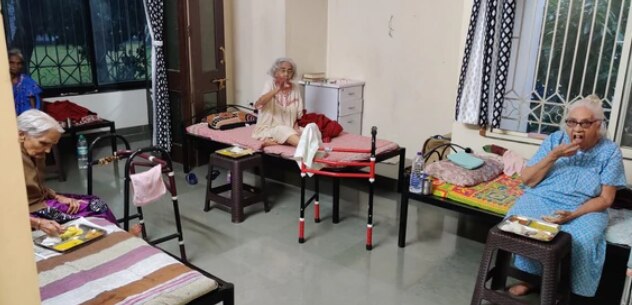 | Old Age Care Our retirement homes offer more than just a place to live—they provide a supportive environment that combines healthcare, psychological support, and... View product → |
Frequently asked questions
How can you recognise that an older adult is losing everyday independence?
Look for repeated falls, missed medicines, unexplained weight loss, unsafe cooking, wandering, nighttime confusion, declining hygiene, or difficulty with transfers, bathing, dressing, toileting, eating, or walking.
What happens during an elderly care assessment?
An assessment compares the person’s abilities with the help required for daily tasks, mobility, medicines, nutrition, personal hygiene, continence, supervision, and clinical support.
How should care change after a fall, surgery, or hospital discharge?
Ask for a written plan covering mobility limits, transfer technique, medicines, wound care, warning signs, follow-up appointments, equipment, and the staff responsible for each task.
Why does dementia care require more than general elderly assistance?
Dementia care requires support for memory loss, wandering, communication, nighttime confusion, medication safety, distress, and changes in behaviour, with consistent routines and supervision.
Related product
 | Old Age Care Facilities within Charges: 24hrs Nursing 24hrs Attended Service Housekeeping and Laundry Breakfast, Tea, Lunch, High Tea, Snacks, Dinner... View product → |